

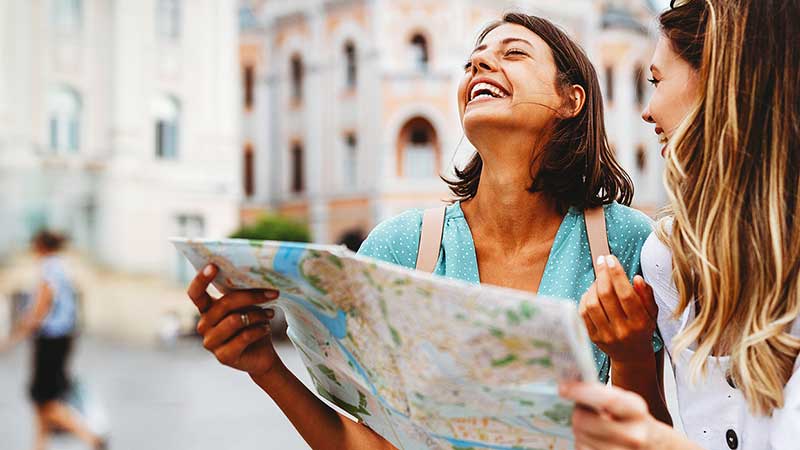
Travel, in all its myriad forms, has long been one of humanity’s most profound desires. From the earliest wanderers seeking new lands to the modern-day jet-setters exploring far-flung destinations, the act of traveling represents something more than a mere change of scenery. It embodies a deep-seated need to explore, to discover, and to experience life in all its complexity. As we venture into unknown territories, we encounter new cultures, ideas, landscapes, and, perhaps most importantly, we encounter ourselves. Travel is a gateway to personal transformation, offering the opportunity not just to see the world, but to see it anew. In this article, we will explore the multifaceted nature of travel, from its cultural significance to its role in self-discovery, and reflect on how it has evolved in the modern era.
The Human Desire to Explore: A Tradition Dating Back Millennia
The desire to travel is not a modern invention. From ancient civilizations, humans have felt the pull to explore the unknown. In ancient Greece, the philosopher Herodotus famously journeyed across the known world, documenting his observations of foreign lands and cultures. The Silk Road, which connected the East and West, was a hub of cultural exchange and commerce, allowing for the movement of people, goods, and ideas across continents. These early voyages were driven by curiosity, trade, and the need to expand one’s horizons, laying the groundwork for the centuries of exploration that would follow.
The Age of Discovery, which began in the 15th century with explorers like Christopher Columbus, Vasco da Gama, and Ferdinand Magellan, marked a significant shift in the nature of travel. This era saw the advent of transoceanic exploration, where the pursuit of new territories and wealth became intertwined with the quest for knowledge. For many, travel during this period was both a perilous and transformative experience. The unknown was vast, and the possibilities were limitless. But it also carried an inherent danger—many explorers did not return from their voyages, their names forever enshrined in history as symbols of human ambition and courage.
Travel as a Catalyst for Cultural Exchange
One of the most enduring benefits of travel throughout history has been its role in fostering cultural exchange. When people from different lands meet, they share not only material goods but also ideas, customs, and beliefs. This exchange has played a crucial role in the development of human civilization, enriching societies and promoting mutual understanding.
The Renaissance, for example, was profoundly shaped by the influx of knowledge and art from the Islamic world, India, China, and Africa. European explorers and traders brought back new concepts, technologies, and artistic inspirations that helped fuel the intellectual and artistic explosion of the period. Similarly, the colonial period, despite its many dark chapters, saw the exchange of cultural practices, cuisines, and religious ideologies between the East and West. The legacy of this exchange is still evident in our modern-day world, where cultures continuously borrow from and influence one another.
In the contemporary era, travel continues to be a conduit for cultural exchange, albeit in a more interconnected and immediate fashion. The rise of mass tourism has made it easier for people to experience distant cultures, while the internet has brought the world closer together by facilitating real-time communication and interaction. Social media platforms like Instagram, YouTube, and TikTok have transformed how we share our travel experiences, creating a virtual space where global communities can engage with one another and celebrate diverse ways of life.
However, while cultural exchange is undoubtedly one of the most enriching aspects of travel, it is not without its complexities. The commodification of culture in the tourism industry has led to the dilution of traditional practices and the exploitation of local communities in some regions. As we travel, we must be mindful of the impact we have on the places we visit, ensuring that our exploration does not come at the expense of the cultures that welcome us.
Travel as a Path to Self-Discovery and Personal Growth
While the external rewards of travel—such as learning about new cultures and experiencing breathtaking landscapes—are undoubtedly compelling, the internal benefits are perhaps even more profound. Travel, in its truest sense, is a journey not just through the world, but into oneself. It is in unfamiliar places, far from the comfort of home, that we often learn the most about our own strengths, fears, and desires.
The act of stepping outside one’s everyday environment fosters a sense of independence and self-reliance. When navigating foreign streets, encountering unfamiliar languages, and overcoming unforeseen obstacles, travelers are often forced to rely on their resourcefulness, resilience, and adaptability. This sense of empowerment can lead to a deeper understanding of one’s own capabilities and a renewed sense of confidence.
Travel also presents an opportunity for introspection. The act of disconnecting from the routine demands of daily life—whether through a solo backpacking trip, a silent retreat, or a leisurely vacation—offers the space to reflect on one’s life choices, values, and aspirations. Away from the noise of modern society, we may find clarity about who we truly are and what we seek in life. In this sense, travel becomes a form of therapy, a way to recalibrate and reconnect with what truly matters.
For many, travel is a path to healing. Whether it is the solace found in nature, the peace of mind that comes with stepping outside the pressures of work and family, or the catharsis of confronting one’s fears through new experiences, travel offers the potential for emotional and psychological growth. This is why so many people return from their travels with a new sense of purpose, a clearer vision of their life’s direction, or a deeper appreciation for the simple pleasures of everyday existence.
Modern Travel: Convenience, Technology, and New Frontiers
The way we travel has changed dramatically in recent decades, thanks to advances in technology, infrastructure, and global connectivity. The world has never been more accessible, with low-cost airlines, high-speed trains, and digital platforms making it possible to plan and book travel in a matter of minutes. The ease of booking accommodation through websites like Airbnb or discovering new destinations through apps like Google Maps has redefined the planning process, making travel more convenient and affordable than ever before.
However, this increased accessibility has also brought about challenges. The rise of mass tourism has led to overcrowding in popular destinations, placing strain on local resources and environments. Over-tourism is a growing concern, as the very allure of once-hidden gems is now contributing to their degradation. Moreover, the convenience of modern travel has sometimes led to a more superficial experience, with tourists rushing from one landmark to the next without taking the time to truly immerse themselves in the local culture or environment.
In response to these issues, a new form of travel has emerged: sustainable tourism. This movement encourages travelers to make more mindful choices, supporting local economies, preserving cultural heritage, and minimizing their environmental impact. Eco-tourism, volunteer travel, and slow travel are all gaining popularity as people seek to travel in ways that are not only personally fulfilling but also responsible and ethical.
The Future of Travel: Virtual Adventures and Beyond
As we look to the future, the nature of travel may continue to evolve in ways we can only begin to imagine. Advances in virtual reality (VR) technology, for instance, may offer the possibility of “travelling” to distant lands without leaving home. While virtual travel can never fully replicate the sensory experience of physically being in a place, it offers a unique way to explore the world from a new perspective, potentially making travel more accessible to those who are unable to physically visit certain destinations.
Additionally, space travel, once the stuff of science fiction, is now becoming an increasingly tangible prospect. Companies like SpaceX and Blue Origin are pioneering efforts to make space tourism a reality, offering the potential for humans to travel beyond our planet and explore the final frontier. While this may still be in its infancy, the prospect of space travel could open up entirely new horizons for human exploration and discovery.
Conclusion: The Enduring Magic of Travel
Despite the challenges and complexities that modern travel presents, its enduring appeal lies in its transformative power. Travel allows us to break free from the constraints of everyday life, to engage with new ideas and perspectives, and to embark on a journey of self-discovery. Whether we are seeking adventure, relaxation, or personal growth, travel offers us the opportunity to explore the world—and in doing so, to explore ourselves. As we move further into an interconnected and ever-evolving global landscape, the magic of travel will continue to captivate us, providing new pathways for discovery, reflection, and connection. Ultimately, travel reminds us of the vastness of the world and the infinite possibilities for growth, change, and exploration that lie before us.

Comments are closed.